
Work in Progress (WIP) helps bridge the gap between operational planning and financial forecasting.
Rather than only understanding how much work exists, WIP helps you understand when work is expected to occur and how it may contribute to future cashflow.
By combining work values, milestone schedules and forecast timing, WIP provides visibility into future commitments before they impact your business.
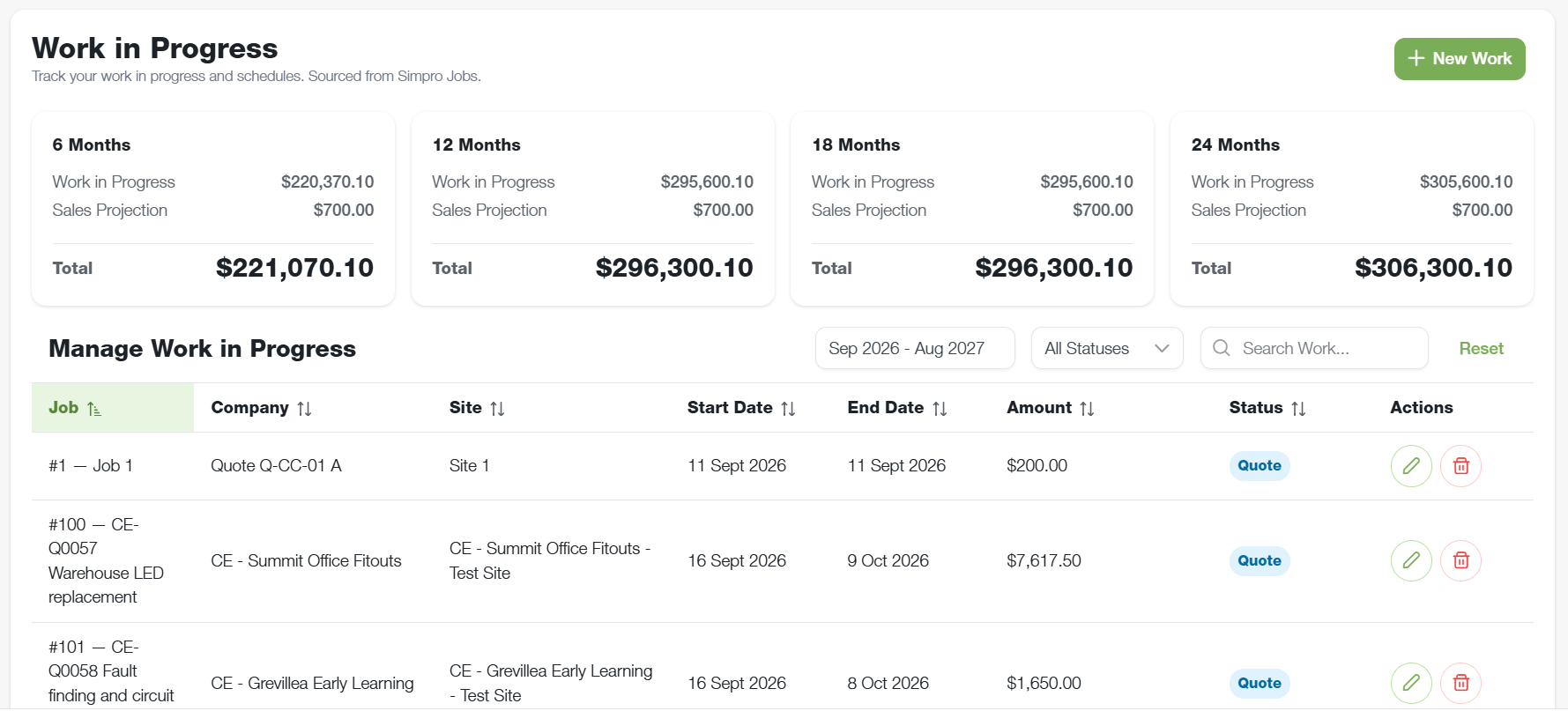
More Than Just A Work Value
A work record's total value represents how much work is expected to be completed.
However, forecasting depends on more than just the total amount.
BCB uses milestone schedules to understand when expected income and costs are likely to occur.
This means two work records with the same value can produce very different forecast outcomes depending on their timing.
Why Timing Matters
Work timing is often just as important as work value.
For example:
Work A:
$50 000 scheduled next month.
Work B:
$50 000 scheduled six months from now.
Although both records have the same value, their impact on future cashflow and planning is very different.
WIP helps make these timing differences visible.
Forecasting Through Milestones
WIP forecasting is driven by scheduled milestones.
Milestones help define:
- Expected income
- Expected costs
- Forecast timing
- Future cashflow contribution
Without milestones, BCB has limited visibility into when work is expected to influence future forecasting.
Understanding Forecast Contributions
When milestones are scheduled, they contribute forecast amounts to future periods.
This allows BCB to understand:
- What work is planned
- When work is expected to occur
- When expected income may be received
- When expected costs may be incurred
As milestone schedules change, forecast contributions are updated accordingly.
Connecting Operations and Cashflow
WIP helps link operational planning with cashflow forecasting.
Rather than viewing work and finances separately, BCB helps connect:
Work -> Milestones -> Forecast Timing -> Future Cashflow
This creates a clearer understanding of how future work may influence future business performance.
Manually Created Work
For manually created work records, milestone schedules can be used to define expected income and cost timing.
Review:
- Milestone dates
- Forecast amounts
- Income schedules
- Cost schedules
- Expected timing
Accurate scheduling helps create more meaningful forecasts.
Simpro Work
Work imported from Simpro behaves differently from manually created work.
Simpro remains the source system for imported operational information.
When reviewing imported work:
- Confirm the imported schedule is correct
- Review the source information in Simpro if required
Why Accurate Scheduling Matters
The more accurately work is scheduled, the more useful your forecast becomes.
Regularly reviewing milestone schedules can help:
- Improve forecast timing
- Improve cashflow visibility
- Support operational planning
- Highlight future workload commitments
- Improve forecasting confidence
Bringing It All Together
Work in Progress helps businesses move beyond simply tracking work values.
By understanding both the value and timing of future work, WIP provides a clearer view of:
- Upcoming commitments
- Future workload
- Expected income timing
- Forecast contribution
- Potential cashflow impacts
When combined with Cashflow, Scenarios and Projected Transactions, WIP becomes a powerful tool for planning what happens next.